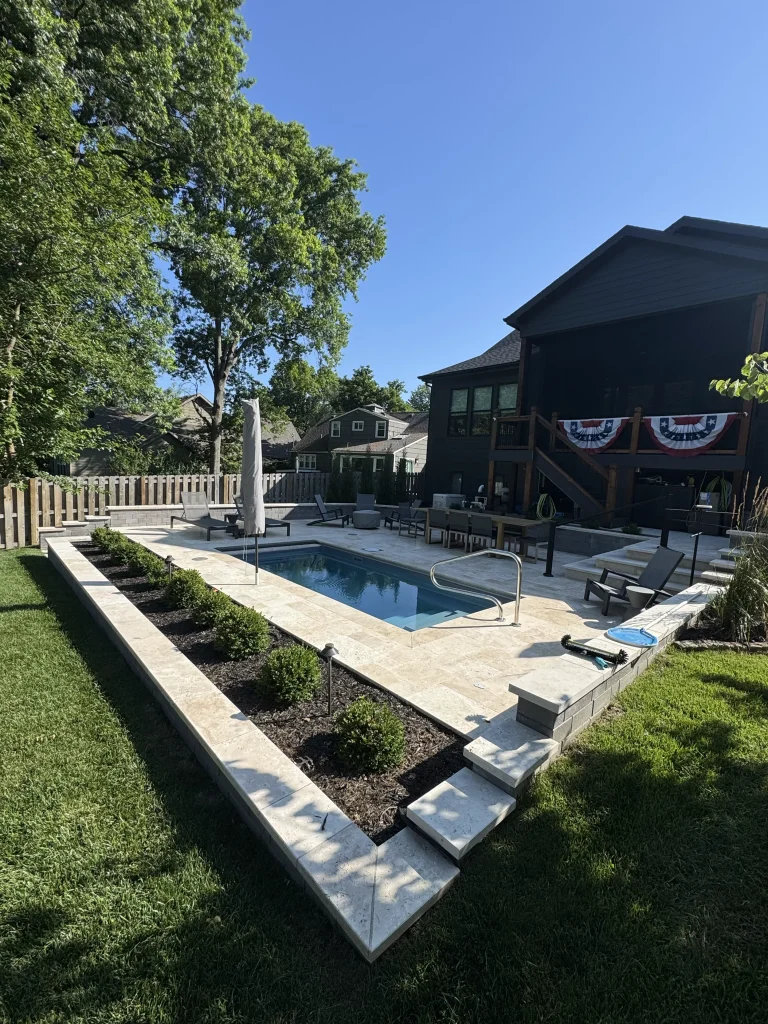
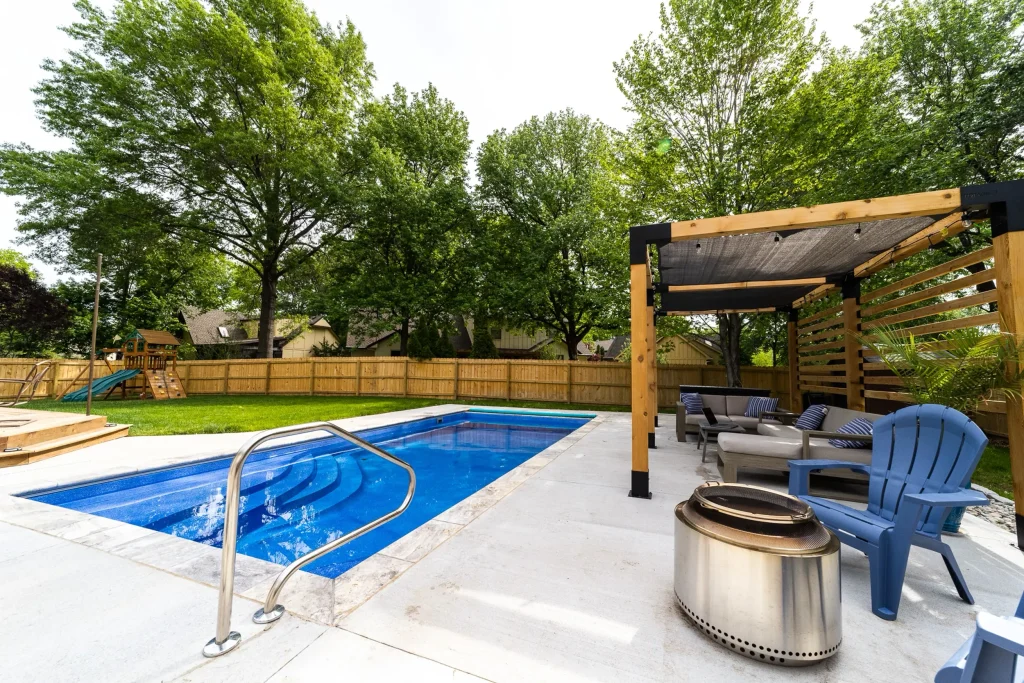
If you’re planning an inground pool in Kansas City, the first big decision is the shell: fiberglass or concrete. Both can give you a beautiful backyard. They differ a lot in how long they take to build, how they hold up through a Kansas winter, and what they cost to own over the next 20 years.
Here’s a straight comparison of a fiberglass pool vs. concrete, written for homeowners in Olathe, Overland Park, Leawood and the rest of the KC metro.
The short answer
For most Kansas City families, fiberglass is the better fit. It installs in weeks instead of months, it handles freeze-thaw cycles well, and it never needs resurfacing. Concrete makes sense when you want a fully custom shape or a pool larger than any fiberglass shell, and you’re comfortable with a longer build and higher upkeep.
How each pool is built
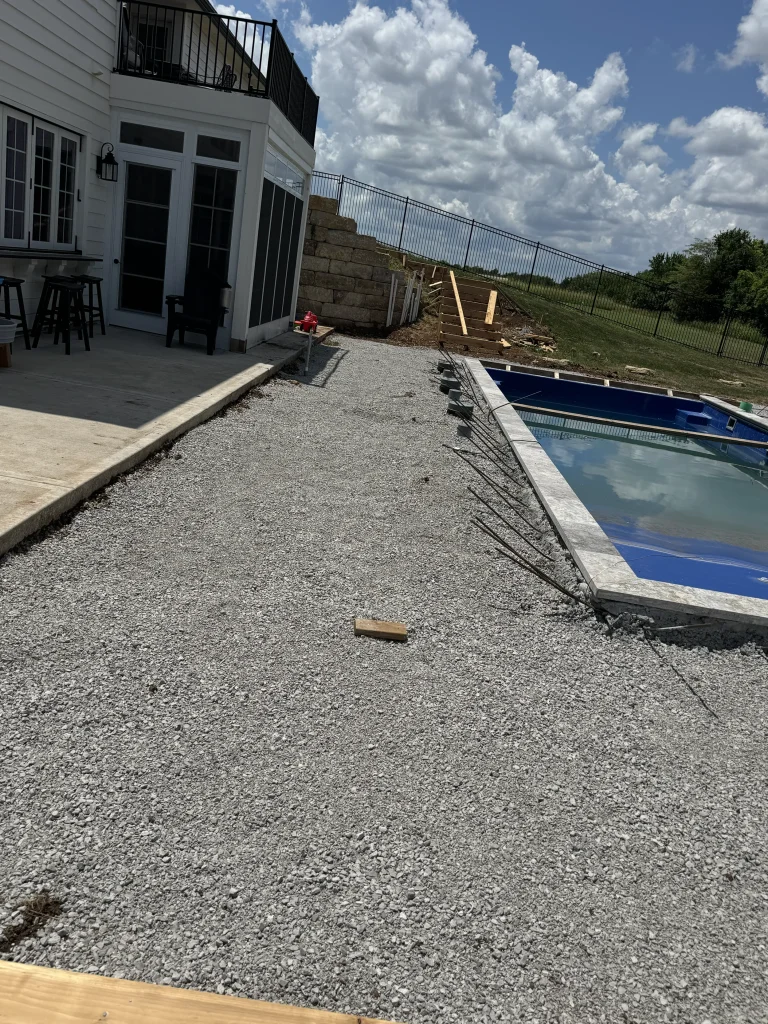
A fiberglass pool is a one-piece shell made in a factory, then delivered and set into a prepared hole in your yard. At Pools by York, the hole is dug about one foot wider than the shell and about 3½ inches deeper to hold a level gravel base. Plumbing and equipment go in, the pool is filled with water while the perimeter is backfilled with gravel, and then coping and decking are installed.
A concrete pool (often called gunite or shotcrete) is built on site. The crew digs, sets steel rebar, sprays concrete, lets it cure, and then applies an interior finish such as plaster or pebble. Every step happens in your backyard, which is why the process takes longer.
Install time: weeks vs. months
This is the biggest practical difference. Our typical fiberglass install timeline is 4 to 6 weeks, and many Barrier Reef models are swim-ready in as little as 4 weeks. Concrete pools commonly take several months from dig to first swim because of curing time and the number of trades involved.
In Kansas City, that matters. Our building season is shaped by weather, and a shorter build means less time with a torn-up yard and more time in the water. If you start design and permitting over the winter, a fiberglass pool can be ready by early spring. (More on that in our guide to planning your pool this winter.)
Durability through Kansas freeze-thaw cycles
Kansas City winters swing above and below freezing again and again. That cycle is hard on rigid surfaces. Concrete pool interiors can develop surface cracks and rough spots over time, which is part of why they need periodic resurfacing.
Fiberglass shells have some built-in flexibility, which helps them handle ground movement and temperature swings. Every fiberglass pool we install comes with a Lifetime Structural Shell Warranty.
Maintenance and long-term cost
Concrete is porous, so algae has more places to take hold. That usually means more brushing, more chemicals, and an interior finish that has to be redone every so often. Resurfacing a concrete pool is a significant expense, and it happens more than once over the life of the pool.
Fiberglass has a smooth gelcoat surface. It limits algae buildup and reduces chemical use, and it never needs resurfacing or liner replacement. Over 15 or 20 years, those savings add up.
Fiberglass also pairs well with a salt-water chlorinator, which many owners prefer for softer-feeling water. Salt systems are an optional add-on with our Pentair equipment packages.
Upfront cost
Based on Kansas City projects, fiberglass pools typically run about $50,000 to $100,000+, and custom concrete pools typically start around $80,000 and can exceed $150,000. A complete project with decking, fencing and features usually lands between $60,000 and $120,000. Our guide to pool costs breaks down what drives those numbers.
Fiberglass is not always the cheapest option on day one, but it’s usually the lower-cost pool to own because there’s no resurfacing and less chemical spending.
Design flexibility and features
Concrete’s strength is that it can be any shape or size. If you want a one-of-a-kind freeform design or a pool longer than 40 feet, concrete may be the way to go.
Fiberglass gives you a set of proven designs instead, and there are more of them than most people expect. We install 175+ models from Barrier Reef, San Juan and Latham, in shapes ranging from rectangular and freeform to kidney and Roman.
Popular features are built right into the shell. A fiberglass pool with a tanning ledge, for example, has the shallow lounging area molded in at the factory. With concrete, the same ledge is custom formed on site and adds to the build time. Across our lineup, 20 San Juan models and 19 Latham models include a tanning ledge, and several Barrier Reef designs include a lounging ledge.
Fiberglass vs. concrete at a glance
|
Fiberglass |
Concrete |
| Typical install time |
4 to 6 weeks |
Several months |
| Resurfacing |
Never |
Periodically |
| Algae and chemicals |
Smooth surface, less upkeep |
Porous surface, more upkeep |
| Shapes and sizes |
175+ set designs |
Fully custom |
| Tanning ledge |
Molded into the shell |
Custom formed on site |
| Typical cost in KC |
About $50,000 to $100,000+ |
About $80,000 to $150,000+ |
Pros and cons of fiberglass pools
Pros: fast installation, low maintenance, no resurfacing, smooth surface that’s comfortable on feet, salt-friendly, lifetime structural shell warranty.
Cons: sizes and shapes are limited to manufacturer designs, and very large pools may not be available as a single shell. Shells also need a clear delivery path into the yard, which we check during your consultation.
Which is right for your backyard?
For a broader look at every pool type, including vinyl liner, see how to choose the right pool for your backyard.
Choose fiberglass if you want to swim sooner, spend less time on maintenance, and pick from a wide range of proven designs. Choose concrete if your design truly can’t be matched by a fiberglass model and you’re ready for a longer build and higher upkeep.
Not sure what size fits your space? Our guide to choosing the right size fiberglass pool walks through plunge, small and full-size options.
Frequently asked questions
Is a fiberglass pool cheaper than concrete?
Usually, over the life of the pool. Upfront prices can overlap, but fiberglass avoids resurfacing costs and typically needs fewer chemicals.
Do fiberglass pools crack in cold weather?
A properly installed fiberglass pool is built to handle Kansas City winters. The shell has some flexibility, and ours carry a Lifetime Structural Shell Warranty.
How long does a fiberglass pool last?
With correct installation, a fiberglass pool delivers decades of performance. The structure is covered for life under our shell warranty.
Can I get a tanning ledge on a fiberglass pool?
Yes. Many models have one molded into the shell, including 20 San Juan and 19 Latham designs, plus several Barrier Reef models with a lounging ledge.
Talk to a Kansas City fiberglass pool builder
Pools by York has installed fiberglass pools across the Kansas City metro for 20+ years. Start with a no-pressure backyard consultation, and we’ll send clear, upfront pricing within 24 hours. Request your consultation or call (913) 747-7665.

 November 20, 2026